 The Early Appropriate Guilty Plea (EAGP) scheme commenced in April 2018.
The EAGP scheme was introduced to promote early identification of issues and resolution in indictable (serious) criminal cases, with the aim of improving court efficiency, reducing delays, and saving resources. It is covered by a Court Practice Note.
Local Court Practice Note.
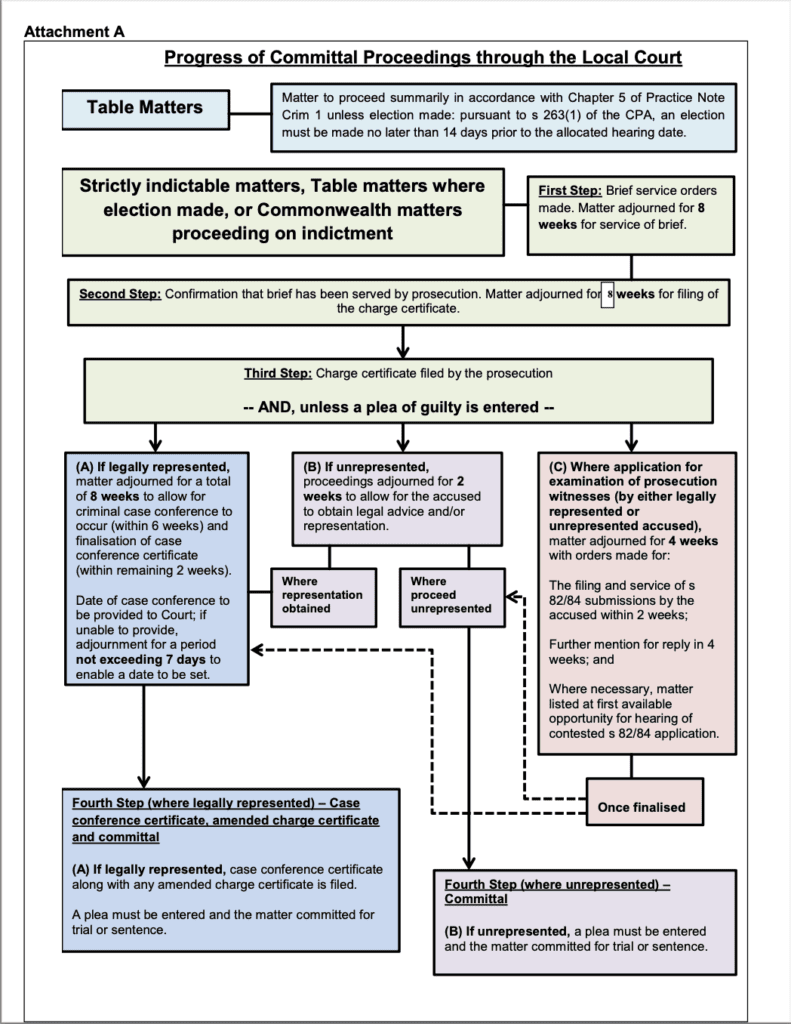
In providing the information in this blog I have relied heavily on the Local Court Practice Note Comm 2 and assisting flowchart. It is a valuable resource for any person engaged in the EAGP process.
A Specific Court Process is followed with identified Time Frames.
The EAGP scheme outlines specific stages between charge and trial where the prosecution must provide certain information to the accused, and when both parties are required to discuss the evidence, charges and issues in each sides case.
Discounts at Sentence Provided in the Sentencing Court for Early Pleas of GUILTY
In addition, the EAGP scheme encourages early guilty pleas by providing sentence discounts. The amount of the discount depends on the stage at which the plea is entered – the earlier the plea, the greater the reduction in sentence (explained further below).
WHICH OFFENCES APPLY TO THE EAGP SCHEME?
The scheme applies to:
1. Strictly indictable offences;
2. Table 1 or Table 2 offences where the prosecutor has elected to deal with the matter on indictment;
3. Commonwealth matters proceeding on indictment; and
4. Serious children’s indictable offences.
Strictly indictable offences cannot be finalised in the Local Court and must be committed to a higher court. They include murder, manslaughter, assault causing death, supply drugs causing death, wound/cause grievous bodily harm with intent, dangerous driving occasioning in death and armed robbery with wounding.
Table 1 offences are indictable (serious) offences, including reckless wounding, causing grievous bodily harm, robbery, larceny (stealing), stealing a motor vehicle, participation in a criminal group and some drug offences (less than a commercial quantity).
Table 2 offences are less serious offences than Table 1, including common assault, assault occasioning in actual bodily harm, sexual touching and stalking and intimidation.
Table 1 and Table 2 offences are usually heard in the Local Court unless the prosecution or the accused elects for them to be by the District Court or Supreme Court, if this occurs then these matters will fall within the EAGP scheme.
WHAT ARE THE STAGES OF THE EAGP PROCESS?
1. BRIEF SERVICE ORDERS (8 week Adjournment)
When you have been charged by police you will receive a court attendance notice, which states when you are required to attend court. This court date is called a “mention.”
At the initial mention for an EAGP matter the Court must make orders for the service of the brief of evidence. The matter will be adjourned for 8 weeks to allow service of the brief.
2. SERVICE OF BRIEF (Further 8 week Adjournment)
8 weeks later, the parties will return to Court to provide an update. Once it is confirmed that the brief has been served the matter will be adjourned for a further 8 weeks to give the prosecution time to file a charge certificate.
A charge certificate is a legal document that formally sets out the charges that the prosecutor intends to proceed with if your case goes to trial in the District or Supreme Court.
3. CHARGE CERTIFICATION and the possibility of a CASE CONFERENCE
At the third step, a charge certificate is to be filed by the prosecution. Then if you are legally represented the the matter will be adjourned for up to a further 8 weeks so that a Case Conference can occur between the DPP and the Defence. This allows for negotiation between the parties.
Unless you have entered a plea of guilty, the following applies:
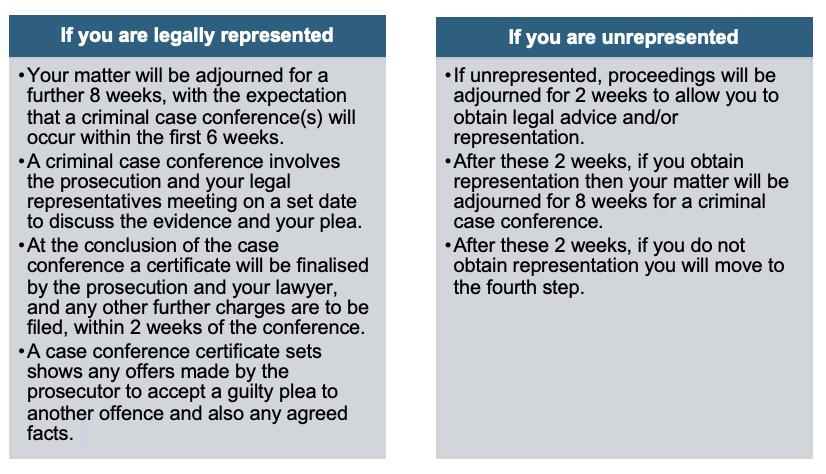
4. COMMITTAL FOR TRIAL OR SENTENCE
You will then return to tell a Magistrate whether you plead guilty or not guilty.
If you plead guilty, the matter will be committed to the District or Supreme Court for sentence.
If you plead not guilty, the matter will be committed to the District Court or Supreme Court for trial.
WHAT SENTENCE DISCOUNTS ARE AVAILABLE?
1. Your sentence could be reduced by 25% if you plead guilty while your matter is still in the Local Court (i.e. after the parties hold a charge certification conference);
2. Your sentence could be reduced by 10% if you plead guilty after your committal hearing but 14 days prior to your trial date; and
3. Your sentence could be reduced by 5% if you plead guilty anytime thereafter.
HOW DOES THE EAGP PROCESS APPLY TO CHILDREN?
Only serious children’s indictable offences are subject the EAGP scheme.
Serious children’s indictable offences include homicide, aggravated sexual assault, an offence relating to the manufacture or sale of firearms that is punishable by imprisonment for 20 years
USEFUL RESOURCES
• Local Court Practice Note Comm 2 and assisting flowchart as attached/hyperlinked.
This article provides general information and is not legal advice.
We encourage you to contact Brady and Associates Lawyers on (02) 9545 3273 if you require information or advice on this process.